Whether you are stepping into coaching for the first time or looking to sharpen an existing approach, the fundamentals of effective rugby coaching are the same at every level: clear communication, purposeful session design and a genuine investment in the players in your care. This guide covers the essentials — practical and immediately usable.
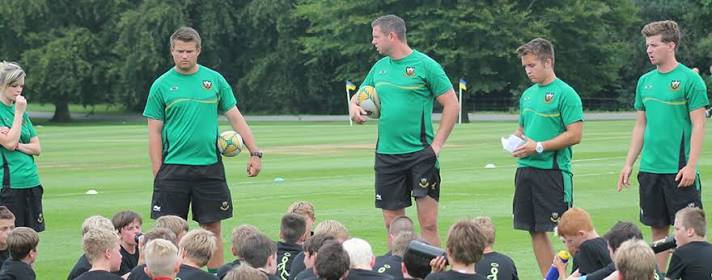
Coaching foundations: what good rugby coaches actually do
The best rugby coaches share a few consistent traits regardless of the level they work at. They prepare thoroughly, communicate with clarity, and create an environment where players feel confident to try things and make mistakes. They understand the game deeply — not just the laws, but the principles that drive good decision-making in attack and defence.
Importantly, effective coaching is not the same as knowing the most about rugby. Many knowledgeable players make poor coaches because they struggle to transfer what they know into language and activities that help others improve. The craft of coaching — of observing, questioning and guiding — is a separate skill from playing, and one that takes deliberate practice to develop.
Communication and player development
Clear, specific feedback is the engine of player development. Vague instructions — "be more physical", "work harder" — give players nothing to act on. Effective feedback identifies exactly what happened, why it matters and what to do differently: "When you arrived at that ruck you were upright — drop your hips on entry and you'll generate more push."
Questioning is often more powerful than telling. Asking a player "what did you see when you received that ball?" builds their decision-making awareness far faster than simply explaining what they should have done. This guided discovery approach is at the heart of modern coaching methodology and is central to RFU coaching pathway development at all levels.
Consistency matters too. Players learn from repetition, and they need to hear the same core messages reinforced across multiple sessions before behaviour changes reliably in a match environment.
Planning effective training sessions
A well-structured rugby training session has a clear objective — a single technical or tactical focus — and builds logically from warm-up through skill practice to a game-relevant application. Sessions that try to cover too many themes leave players confused and coaches frustrated.
The most effective format for most club environments is: physical activation (8–10 minutes), skill isolation in small groups (15–20 minutes), integrated practice with opposition (20–25 minutes), conditioned game that reinforces the session theme (15–20 minutes). This structure gives players context for why they are practising a skill before they are asked to use it under pressure.
Keep instructions short. A five-minute talk at the beginning of a drill loses the back half of any group. Set the scene in 90 seconds, let players try, then coach what you observe.
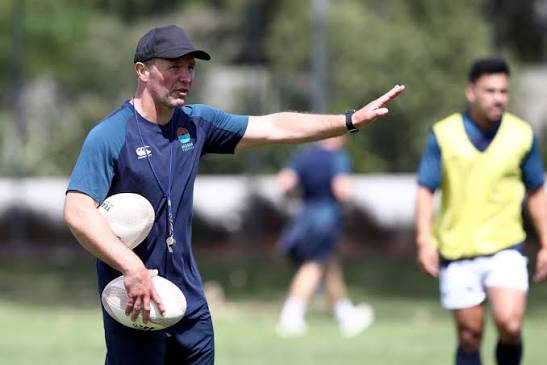
Fitness and conditioning for rugby
Rugby places simultaneous demands on aerobic fitness, speed, strength and the ability to repeat high-intensity efforts after short recovery periods. Coaches do not need to be S&C specialists, but they do need to understand the physical profile their sport requires and build sessions that develop it progressively.
The Bronco test — 20m, 40m and 60m shuttle runs completed five times — is the most widely used fitness benchmark in rugby, from academy environments through to professional combine days. Coaches who incorporate Bronco-paced work into training give their players both a fitness stimulus and familiarity with the test under match-like fatigue. Sprint speed, particularly over 10 metres, is also increasingly tracked as a key metric at scouts' combine events.
Strength work should complement, not compete with, rugby training. One to two sessions per week focused on hip-hinge movements (deadlifts, trap bar pulls), upper-body pulling and explosive lower-body work is sufficient for most club players in-season.
Team culture and environment
Culture is not a poster on the changing room wall — it is the sum of what a coach tolerates and what they celebrate, consistently, over time. Teams that perform under pressure almost always have coaches who have invested in psychological safety: players know they can make a mistake without being humiliated, ask a question without being dismissed, and disagree respectfully without being excluded.
Practical steps: acknowledge effort publicly before you critique technique; address individual performance issues privately; give senior players real responsibility (not just a title); and model the behaviours you want — punctuality, preparation, honesty — because the squad watches the coach more closely than any coaching manual.
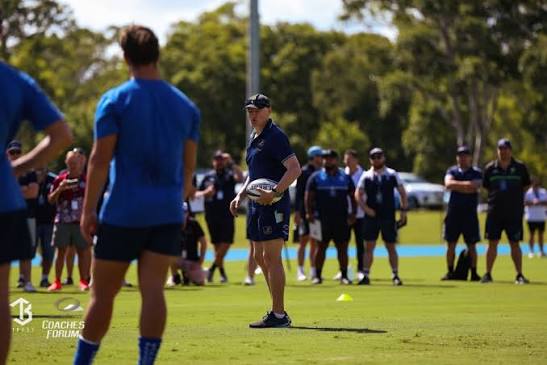
Your own development as a rugby coach
The coaches who improve fastest are the ones who treat their own development with the same rigour they bring to their players'. That means seeking feedback, watching other coaches work (at any level — there is always something to learn from a well-run junior session), and reflecting honestly after each session on what worked and why.
In England, the RFU offers a structured coaching pathway from Level 1 (introductory, suitable for first-time coaches) through Level 2 (club coaching) to Level 3 and above for elite environments. Completing Level 1 or 2 gives you formal coaching techniques, safeguarding awareness and a network of other coaches to learn from. World Rugby's online coaching resources complement these qualifications and are freely available.
If you are coaching players with aspirations to play at a higher level, help them build a profile that scouts can find. The 5 Metre Scrum scout board is used by clubs and agents to identify players — encouraging your squad to build player profiles with verified combine statistics costs nothing and significantly increases their visibility.
Frequently asked questions
What qualifications do I need to coach rugby in England?
No formal qualification is legally required to coach at grassroots level, but the RFU Level 1 Award in Coaching Rugby Union is strongly recommended as a starting point. It covers basic coaching techniques, player welfare and safeguarding, and is usually completed in a single weekend course.
How do I coach a position I never played?
Study the position's responsibilities through match analysis and specialist resources, talk to players who have played it, and use questioning to draw out what experienced players in that role already understand. Knowing what good looks like — even without having played it yourself — is achievable, and intellectual honesty about your own knowledge gaps builds more trust than pretending.
How long should a rugby training session be?
60 to 90 minutes is optimal for most amateur and club environments. Longer sessions see diminishing technical returns as players fatigue, and buy-in drops. A focused 70-minute session with a clear theme will develop players faster than a sprawling two-hour session trying to cover everything.
How do I motivate players who are not improving?
Start by understanding why. Lack of improvement usually comes from one of three sources: the player does not understand what they need to do differently, the player understands but lacks the physical capacity, or the player is not engaged. Each requires a different response — clearer coaching, appropriate conditioning, or a different conversation about their goals.