A rugby lineout is how play restarts after the ball goes into touch. The two packs form parallel lines at right angles to the touchline, a hooker throws the ball straight down the gap between them, and lifted jumpers compete for it in the air. This guide explains how a lineout works under World Rugby's Law 18: who throws in, the rules on spacing, lifting and straight throws, each player's job, and how teams use the lineout to attack.
What is a lineout in rugby?
Whenever the ball or a player carrying it crosses the touchline, the ball is out of play. Unless a quick throw-in is taken, the referee sets a lineout at the "mark of touch", the point where the ball went out. The lineout is a set piece, like the scrum: the forwards form up in an agreed shape and contest possession in a controlled way.
The lineout happens in a defined strip of the pitch called the lineout zone. That runs from the dashed 5 metre line to the dashed 15 metre line, both measured in from the touchline, so the contest takes place in a 10 metre channel. A lineout can never form within 5 metres of either try line.
Who throws in, and where?
In most cases the team that did not put the ball into touch throws in, at the point where it went out. Law 18 sets out a few important exceptions.
| How the ball went out | Who throws in | Where |
|---|---|---|
| Carried or passed into touch | The other team | Where it crossed the touchline |
| Kicked out after bouncing in the field of play | The other team | Where it crossed the touchline |
| Kicked directly into touch from outside the kicker's 22 | The other team | Level with where it was kicked, or where it went out if that is nearer the kicker's try line |
| Penalty kicked into touch | The kicking team | Where it crossed the touchline |
| 50:22 (kicked from inside the kicker's own half, bouncing in play before going out in the opposition 22) | The kicking team | Where it crossed the touchline |
The third row is why fly-halves avoid kicking straight out from outside their own 22: the lineout goes back to where they kicked from, so they gain no ground. The penalty and 50:22 rows are the opposite. They give the kicking team both the territory and the throw, which is why a penalty kicked to the corner so often leads to a driving maul and a try.
The main rugby lineout rules
- Numbers: each team needs at least two players in the lineout. The throwing team decides the maximum, and the opposition may match it or use fewer, but never more.
- Spacing: each line stands half a metre from the mark on its own side, keeping a one metre gap between the teams until the ball is thrown.
- Timing: teams must be ready to form the lineout within 30 seconds of the mark being made.
- The throw: the thrower stands on or behind the touchline and must throw the ball straight along the mark. It has to reach the 5 metre line before touching the ground or a player.
- Not straight: if the throw is crooked or short, the opposition chooses either a lineout with its own throw or a scrum.
- Lifting: teammates may lift and support a jumper, but not before the ball leaves the thrower's hands, and they may not grip below the shorts from behind or below the thighs from the front.
- Players not in the lineout: everyone else, apart from the thrower, the receiver and one opposing player near the touchline, must stay at least 10 metres back from the mark until the lineout ends.
- When it ends: once the ball or the ball-carrier leaves the lineout or goes beyond the 15 metre line, or when a ruck or maul forms and all its players’ feet have moved beyond the mark.
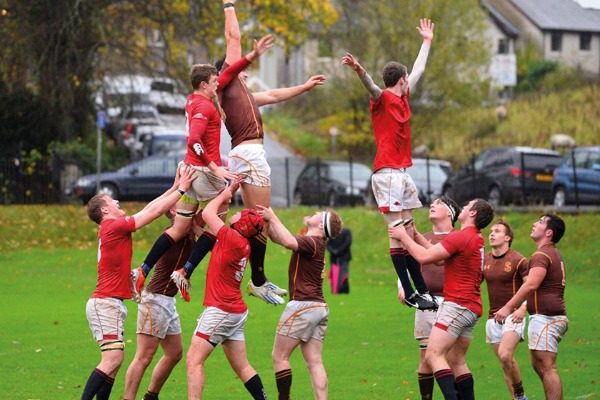
Rugby lineout roles: thrower, jumpers, lifters and receiver
The thrower (usually the hooker, number 2)
Throwing in is a core skill for a hooker. It has to be accurate under pressure, at different heights and speeds, often into a crosswind. Coaches judge hookers heavily on their lineout success rate, and a hooker who loses several throws in a match rarely keeps the shirt.
The jumpers (usually the locks, 4 and 5, plus back-rowers)
Locks are the main targets, with a back-rower, often the 6 or the 8, as an extra option. Good jumpers combine height with timing and quick footwork, so they can move along the line, take off before defenders read them and secure the ball cleanly.
The lifters (usually the props, 1 and 3)
Props do most of the lifting. A quick, high lift can win the ball before the opposition jumper leaves the ground, and a stable platform lets the jumper deliver the ball cleanly or set up a maul.
The receiver (usually the scrum-half, 9)
Each team may have one receiver standing between the 5 metre and 15 metre lines, two metres back from their own players. The receiver takes the ball off the top or from the back of a maul and moves it to the backs.
Quick throw-ins
A team does not always have to wait for a lineout. A player can take a quick throw-in using the same ball, as long as nobody else has touched it and the lineout has not formed yet. The throw must be taken between the mark and the thrower's own try line, travelling straight or backwards, and must reach the 5 metre line. Quick throws are a favourite weapon of wingers and full-backs looking to counter-attack before the defence has organised.
Attacking and defending a rugby lineout
Attacking options
- Off the top: the jumper catches and taps or passes the ball straight down to the receiver, giving the backs fast ball against a defence still 10 metres back.
- The driving maul: the jumper lands, the pack binds around them and drives forward. Close to the try line this is one of the most reliable try-scoring moves in the professional game.
- Shortened lineouts: using fewer players (for example four instead of seven) creates more space for movement and forces the defence to match those numbers.
- Movement and dummies: jumpers and lifters shift position after the call to lose their opposite numbers before the throw.
Defending
The defending side can contest in the air with its own lifted jumper, or choose not to compete and set up early to stop the maul. Reading the throwing team's calls, patterns and favourite targets is a major part of a forwards coach's video work, and teams that steal opposition ball regularly gain a big territorial advantage.
What scouts look for at the lineout
For recruiters, the rugby lineout produces some of the most measurable numbers in rugby. A hooker's throwing accuracy and a lock's catches and steals are tracked at every professional level. That is why second-row forwards should list their height and standing reach, and hookers should include clean lineout footage in their rugby highlight reel. Our guide to rugby team numbers explains how each position fits into the pack.
A free 5 Metre Scrum player CV lets you record your position, height, reach, combine stats and video in one profile scouts can filter on the Scout Board.
Frequently asked questions
What is a lineout in rugby?
A lineout is the set piece used to restart play after the ball goes into touch. Players from both teams form two lines at right angles to the touchline, and a player, usually the hooker, throws the ball straight down the middle for jumpers to contest.
Can you lift players in a rugby lineout?
Yes. Teammates may lift and support a jumper once the ball has left the thrower's hands. They may not grip below the shorts from behind or below the thighs from the front.
What happens if a lineout throw is not straight?
The opposition gets the choice of a lineout with its own throw or a scrum. The throw must also reach the 5 metre line before touching the ground or a player.
How many players can be in a lineout?
At least two from each team. The throwing team decides the maximum, and the defending team may use the same number or fewer, but not more.
Sources and further reading
- World Rugby: Law 18, Touch, quick throw and lineout
- World Rugby: Law 1, The ground (pitch markings)
- World Rugby: 2022 law changes summary (50:22)